Friday, November 6, 2015

ALIGARH: Hansal Mehta's Gripping Drama on Homosexuality


Here is one director who needs to be written and talked about more for his brutally honest, hard-hitting films over the past few years. Hansal Mehta's last two ventures, Shahid (2013) and Citylights (2014) surely deserved more coverage and discussion in the media than the usual pre-release reportage in the news channels. Of course, it helped that Shahid (based on the life of lawyer and human rights activist Shahid Azmi, who was assassinated in 2010 in Mumbai) received the national awards for the best actor (Raj Kummar Rao) and director.

Hansal Mehta has moved a long way from the days when he was directing a TV cookery show titled Khana Khazana in the 1990s and made quite a few forgettable duds in mainstream Bollywood.

His latest film, Aligarh, is garnering accolades from critics and standing ovations from audiences in film festivals. The film relates the true life story of Dr Shrinivas Ramachandra Shiras, a professor of Marathi at the Aligarh Muslim University, who was suspended from his job for his sexual orientation. After successfully appealing his suspension, he died in suspicious circumstances.

In his review in firstpost.com, journalist and LGBT rights activist Ashok Row Kavi writes:

"....the film is a masterpiece of cinematic skills bundled deftly by Mehta and writer Apurva Asrani with several LGBT staffers in the unit.
....Amidst the sometimes surreal sets, Manoj Bajpayee stands out as Professor Siras (at Aligarh Muslim University). Looking crushed and broken as the closet homosexual, a word he does not even understand, he plays the role to perfection...
...What's chilling about the film is that what happened to the protagonist could happen anywhere in India – in posh Malabar Hill, in the dreary landscape of Bareilly or even in the picturesque hills of the North-East. What Mehta and writer Apurva Asrani have done is pluck out a commonplace professor in a commonplace university and weave a true life story into a tapestry of terrifying, compelling drama..."

The film has got effusive praise from Rediff.com's critic Aseem Chhabra who writes :

"Aligarh is a milestone in the history of Indian cinema that should start the much needed conversation about how India treats gays and lesbians...
...What Mehta and his scriptwriter Apurva Asrani (the first script by the award-winning film editor) want us to know is that Siras' sexuality is his personal affair. What happens to him in the the film (and what was done to the good professor by the homophobic AMU administration) is completely wrong, a violation of his privacy, an invasion of his personal space and the denial of his fundamental rights."


Wednesday, November 4, 2015

Shabana Azmi on Smita Patil: "We were similar in many ways, but (alas) could never be friends"


In her tribute to the late actress Smita Patil (October 17, 1955-December 13, 1986),  actress Shabana Azmi recounts:


"We had so much in common; we came from similar backgrounds, were launched by the same director, had similar aesthetics and worked in the same kind of cinema. Today, in public memory Smita and I are so closely bonded together that I feel I could well be Shabana Patil and she Smita Azmi! She had a short career span and yet 29 years after she passed away, parallel cinema in India will never be mentioned without Smita Patil’s name emblazoned in golden letters.


Alas! We could never be friends. The rivalry between us, some of it manufactured by the media and some of it real, caused friction. I’ve said this before and I acknowledge it again that I have been guilty of making uncharitable remarks about her and I regret it. There were efforts at reconciliation and we were able to maintain civility but it never turned into friendship."

Here is the full article:   Shabana Azmi: The Smita Patil I knew 

Another piece on Smita that I felt is a must-read (for its frank overview of her career and persona) is by documentary film maker and writer Gautam Chintamani. He made a pertinent point, I thought, when he said, 

"Perhaps Smita Patil was cut from the same fabric as Waheeda Rehman, the other great from a couple of generations before her, who, like Patil, was relegated to be second to Nargis or Meena Kumari even though her body of work far outdid most. Many a times cinema witnesses artists come in pairs like Satyajit Ray and Mrinal Sen, Naseeruddin Shah and Om Puri, Shabana Azmi and Smita Patil that inspire and push each other but often one of them is preordained to remain in the other’s shadow. Patil’s untimely death may have added an extra veneer of greatness to the actress when compared to Azmi, who often ended up walking off with more critical acclaim in the films the two worked together. 
Patil’s premature death might have made her untouchable but at the same time also subtly changed the trajectory of Azmi’s career by pushing her to a venerable position as an actor before time thereby depriving her of challenges. Patil got enough accolades for her role inArth (1982) and she believed that hers was a far more nuanced character to play than Azmi’s but wasn’t too satisfied with the way the roles were tinkered around midway."

Sunday, November 1, 2015

'The latest gem from evolving Indian cinema'


The 'Titli' review in Hindustan Times:

"No, Titli doesn’t frighten you. It pushes you out of slumber and makes you see the after-effects of a waywardly classic liberal economy....It is about a world that co-exists right in our midst, a world so lowly that we ignore but never forget while driving back home in the still of the night.
Its tryst with reality will keep you hooked till the end, to say the least. Titli is the latest gem from evolving Indian cinema. Don’t even think of missing it."

http://www.hindustantimes.com/movie-reviews/titli-review-this-is-the-best-hindi-film-of-the-year-so-far/story-upwdbFVhPQ95hrOFRwQM2L.html

For some interesting insights and views on the film from producer Dibakar Banerjee, director Kanu Behl and actors Ranvir Shorey and Shashank Arora, go to my earlier post:

http://chattingfilms.blogspot.in/2015/10/titli-explores-family-dysfunctional.html 


Wednesday, October 28, 2015

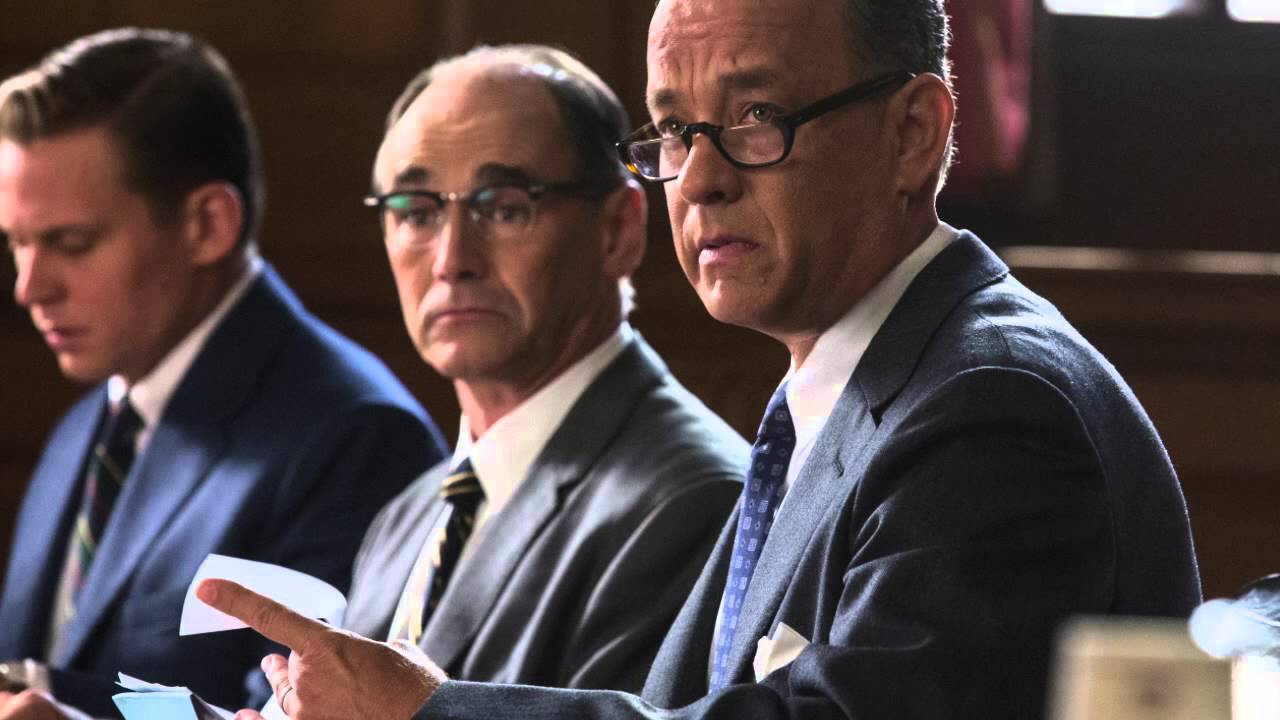
'Spielberg moves to a new realm of artistry in Bridge of Spies'


In a wonderful review on Spielberg's latest film, Bridge of Spies, The Hindu's critic Baradwaj Rangan says "with films like Munich and Bridge of Spies, Spielberg has moved to a realm of artistry where he’s able to put out ideas and also give us cinema, which is something of a Holy Grail for mainstream filmmakers who aren’t just out to make a buck.

He further writes that "It’s important to judge Spielberg as a mainstream filmmaker, and not compare him to someone who might make more uncompromised films that would play in a handful of art-house theatres.) How to entertain versus how to educate. How to make us enjoy the film (a function of our senses) and yet make us think (a function of the intellect). Spielberg balances it all beautifully (in Bridge of Spies)."

I was particularly happy to see Rangan mention about director Guillermo del Toro's admiration for Spielberg's style of making films (especially, Catch Me If You Can). In a recent interview with deadline.com, Toro said, "It’s preternaturally nimble with such grace in the way it’s staged. It’s so brisk. It’s so breathless. It’s so apparently effortless and so damn fluid. The hardest thing to accomplish on film is to make time stand still, or make a story completely fluid. Those are two truly, truly difficult things to do… The way [Spielberg’s] narrative flows is just almost miraculous and so beautifully staged.”

Rangan adds: "In other words, del Toro admires Spielberg for the reasons many of us do: his amazing ability to direct a sequence. Few other directors use the space on screen so well, move the camera so instinctually that we think this is the only way this sequence could have been staged, the only way it would have made sense."

Read the full review here

Monday, October 26, 2015

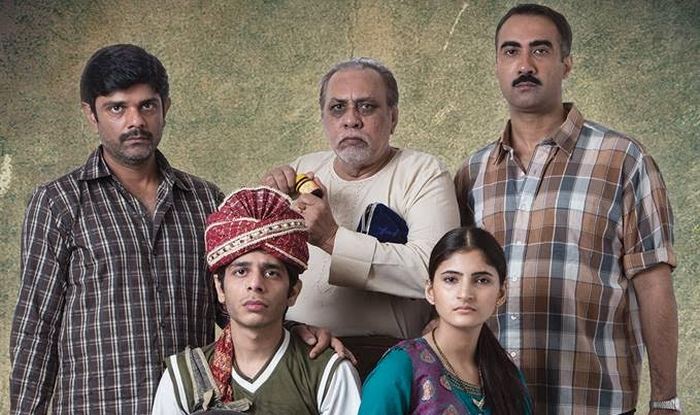
TITLI: When Normal is Dysfunctional in Delhi's badlands


I am sure fans of director Dibakar Banerjee (Khosla Ka Ghosla, Oye Lucky! Lucky Oye!, Shanghai) would hate to miss this flick.

This time, however, Dibakar has donned the producer's mantle (along Yash Raj Films), helping his team member Kanu Behl transform a script into a film that has won rave reviews at Cannes 2014 and other international festivals.

Story synopsis: In the badlands of Delhi's hellish underbelly. Titli, the youngest member of a violent car-jacking brotherhood, plots a desperate bid to escape the 'family' business.

Here is the trailer: https://m.youtube.com/watch?v=OOqiQiMkXDA&feature=youtu.be

Dibakar and his team members had some interesting insights on the film.

In one interview, Dibakar says: "To be honest I didn’t quite pick Titli. It was Kanu who picked me as the producer. Titli, as a script from the NFDC Film Script Lab, was one of the most sought after Indie scripts of 2013. At various points, many producers, including YRF (before my association with them), wanted to produce it. I was at first involved only creatively because I was fascinated by the script and the characters. What grabbed me was the fact that it said many profound things in layers, without the characters and the milieu sounding pretentious or arty. It’s one of the simplest films I have seen in terms of its vocabulary: Simple and strong yet truly deep."

In the same interview, Director Behl points out that Dibakar played a big role in creating an enabling environment for the film to be made. "Dibakar is a director’s producer, because he himself is a director. I think that while being the co-producer of Titli, Dibakar was trying to give me the working conditions he himself would want as a director. Whether it was a crucial session on the script or while finishing the edit, his experience as a filmmaker helped cut out the fat. Other than that, the most important I would say, have been the conversations, unrelated to Titli, that we’ve had over the years. They have helped nurture my voice."

In another piece, Ranvir Shorey (who plays one of Titli's brothers in the film) says: “It is never easy to essay characters that are far removed from your everyday life but most of filmmaking is about this. I do not belong to that social class, and it is quite different to read about such things and watch them on TV. We had workshops to help us understand the psyche, and how to talk like them."

The film releases on October 30, 2015.

Friday, October 23, 2015

Subrata Mitra: The Cinematic Eye of Satyajit Ray


A wonderful piece on Subrata Mitra, one of Indian cinema's pioneering cinematographers who brought a unique styule and sensibility to the art of capturing moving images. Mitra is acclaimed by cinematic greats around the world for his magical use of natural and 'bounce' light  to create black-and-white masterpieces for film makers  such as  Satyajit Ray (Pather Panchali, Apur SansarAparajito, Devi), Merchant-Ivory (Householder, Shakespearewalah) and Basu Bhattacharya (Teesri Kasam).  

As the writer says:

"...Subrata Mitra can best be described as the perfect cinematic eye of Satyajit Ray. So well did he understand Ray’s thoughts, imagination and visualisation that his camera's interpretation of them was sans any flaws....

...Ray’s films after 'Nayak' (1966) lacked the genius of Mitra’s cinematography. Mitra sans Ray was also not at his altruistic best. One of Indian cinema’s greatest tragedies.


...The genius took a sabbatical from cinematography in mid 70s. He returned in 1986 to shoot Ramesh Sharma’s 'New Delhi Times'. The shot of Shashi Kapoor running in a dream sequence as his newspaper office burns remains a lesson in cinematography...."


Read the full article: http://www.thehindu.com/features/friday-review/with-a-perfect-eye/article7792914.ece

Thursday, October 22, 2015

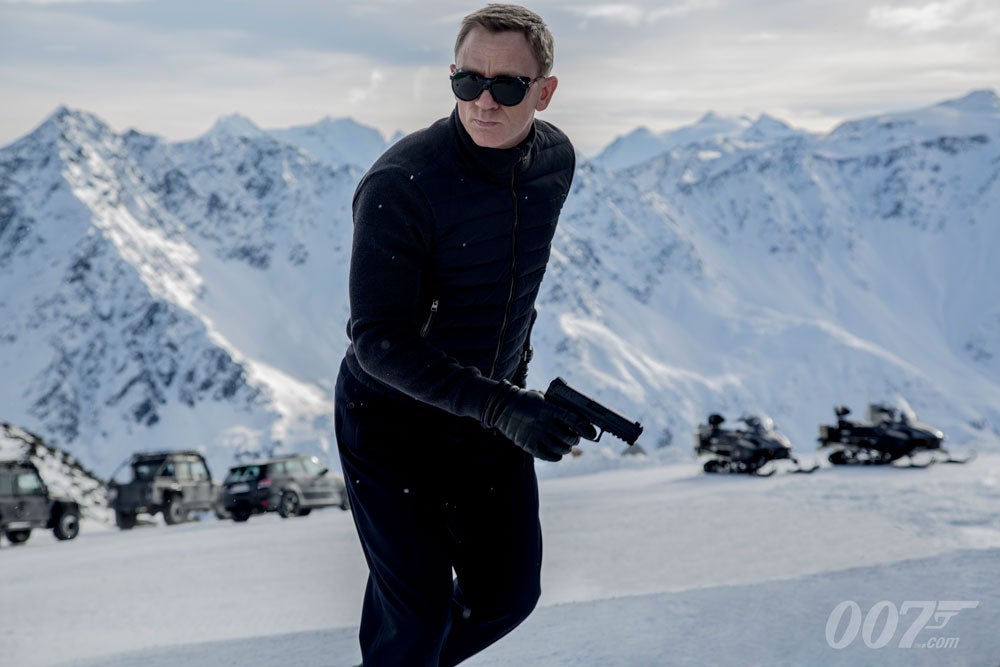
'Spectre' ultimately feels like a lesser film than 'Skyfall' : Hollywood Reporter


The reviews of 'Spectre' are out, and most of them have given five-star ratings to the film. Of the many I read, I thought the review by Hollywood Reporter gave a pretty rounded view of the movie, picking out the high-points and pitfalls in good measure.  
According to the magazine, "while its commercial prospects seem bulletproof, Spectre ultimately feels like a lesser film than Skyfall, falling back on cliche and convention."
It further adds: "Spectre is the most expensive 007 movie to date, with a budget rumored to be well north of $250 million. At 148 minutes, it is also the longest, which becomes evident in the bloated second half. But Mendes kicks off in the same impressive mode as Skyfall, deepening Bond's back story while self-consciously borrowing from the franchise's classic Sixties heritage. The first act is great, full of dark portent and bravura film-making flourishes. However, the final hour disappoints, with too many off-the-peg plot twists and too many characters conforming to type."


However, Hollywood Reporter might seem as an exception to the general consensus among critics that Spectre's cast and crew shakes and stirs the Bond brew well enough to deliver a top-notch, glued-to-the-seat entertainer.   
Here is a roundup of the reviews by leading papers and magazines across the globe. Click on the links inside for the full reviews.